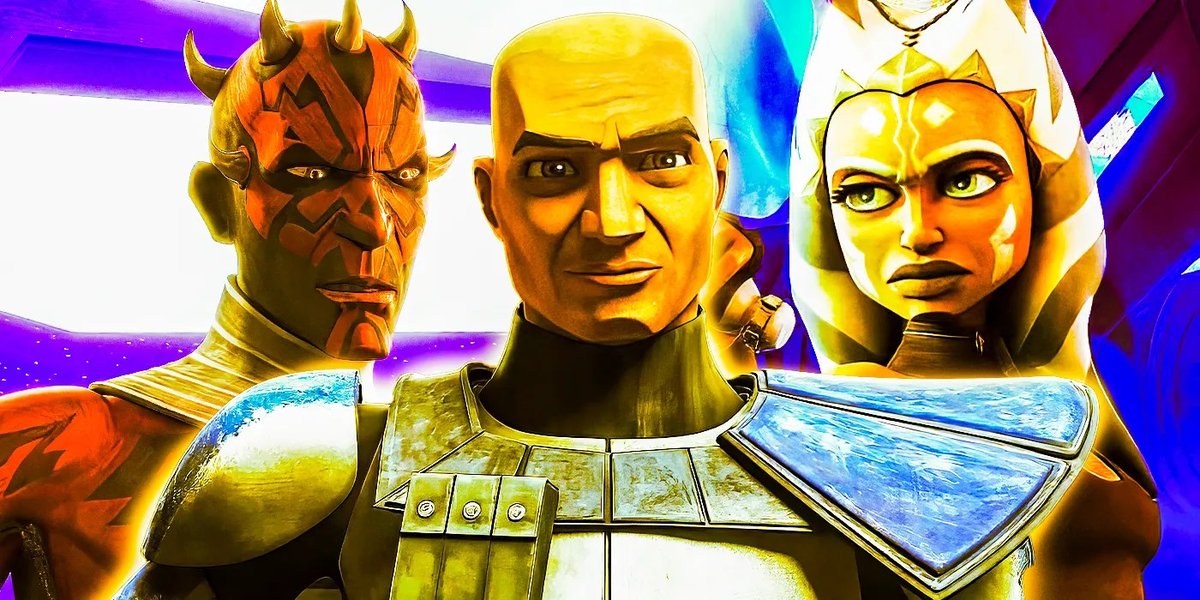
The final season of Star Wars: The Clone Wars isn't just a farewell to a beloved animated series; it's a masterclass in character arcs and development. As the galaxy teetered on the brink of galactic civil war, Season 7 delivered profound, often heartbreaking, conclusions to journeys we'd followed for over a decade. It wasn't just about battles and political intrigue; it was about the deeply personal struggles of characters caught in an increasingly morally ambiguous conflict, culminating in moments that redefined their legacies forever.
This wasn't merely a revival; it was a carefully orchestrated denouement, a chance for creators George Lucas and Dave Filoni to tie off narrative threads left dangling after the show's initial run concluded in 2014. Revived by Disney+ in 2018 for a 12-episode swansong, the season, which premiered on February 21, 2020, and concluded on May 4, plunged viewers back into the heart of the Clone Wars, setting the stage for the cataclysmic events of Revenge of the Sith. But more than anything, it was a character study, showcasing the ultimate tests of loyalty, identity, and the very nature of good and evil.
At a Glance: The Final Leg of the Journey
- Ahsoka Tano's Metamorphosis: From disillusioned former Jedi to a beacon of resilience, her arc explores identity outside an institution.
- Captain Rex's Unwavering Loyalty: A deep dive into the unique bond between clones and Jedi, tested by the ultimate betrayal.
- Darth Maul's Tragic Foresight: A villain's desperate, albeit twisted, attempt to prevent a greater evil, exposing Anakin's impending doom.
- The Clones' Collective Tragedy: The heartbreaking reality of their programmed obedience overriding their individual spirits.
- Anakin Skywalker's Shadow: Though limited screen time, his presence looms large, with his character arc reaching its grim inevitability.
- Storytelling Excellence: How Season 7 masterfully used external conflict to reveal internal struggles and set up future narratives.
The Weight of a Galaxy: Why Character Arcs Mattered in Season 7
For years, The Clone Wars had painted a vivid picture of a galaxy at war, but Season 7 peeled back the layers to reveal the deeply personal toll. The show’s strength always lay in its ability to humanize the war, making us care about the individual soldiers, the politicians, and especially the Jedi caught in its machinery. In its final act, this focus became paramount. As the war intensified, characters were forced to confront their core beliefs, loyalties, and fears, leading to developments that were both logical extensions of their established personalities and shocking revelations of their true natures.
This isn't just good writing; it's essential. Without these character arcs, the grand narrative of Star Wars loses its emotional anchor. We wouldn't understand the depth of Anakin's fall, the weight of Ahsoka's choices, or the tragedy of the clone troopers without seeing their full journeys. Season 7 provided the missing pieces, making the saga richer and more poignant. If you're looking for a definitive overview, be sure to check out The Clone Wars Season 7 guide for a complete picture of the season's impact.
Ahsoka Tano: From Padawan Lost to Champion of the Unseen
Ahsoka Tano's journey in Season 7 is, arguably, the beating heart of the final episodes. Having walked away from the Jedi Order after being unjustly accused, she begins the season adrift, grappling with her identity beyond the uniform and the lightsaber. Her poignant reflection, "As a Jedi, we were trained to be keepers of the peace, not soldiers. But all I've been since I was a Padawan is a soldier," encapsulates her core conflict. She feels a profound disconnect from the war she's been fighting and the institution that trained her.
Her initial arc, the "Walkabout" or "Martez Sisters" arc, is crucial for this development. Living in the Coruscant underworld, Ahsoka witnesses the war's impact on ordinary citizens, far removed from Jedi temples and Republic war rooms. She sees corruption, desperation, and the grey areas of morality outside the black-and-white doctrines of the Jedi. Through Trace and Rafa Martez, she learns empathy for those who live outside the law, challenging her preconceived notions of justice and right. This experience grounds her, forging a stronger, more independent moral compass that will prove vital later.
When she's drawn back into the conflict by Bo-Katan Kryze for the Siege of Mandalore, Ahsoka doesn't return as a Jedi. She returns as herself, Ahsoka Tano, a warrior guided by her own principles and her deep concern for the people suffering under Maul's tyranny. This distinction is subtle but profound. She accepts the lightsabers given to her by Anakin, a symbol of their bond, but she doesn't rejoin the Order. This allows her to operate with a freedom the Jedi, bound by dogma and politics, increasingly lacked.
Her final confrontation with Darth Maul is a psychological as much as a physical battle. Maul, with chilling prescience, tries to warn her of Anakin's inevitable fall, telling her, "He is going to shatter everything... He is the key to everything." This moment forces Ahsoka to confront the darkness she senses in Anakin, a truth she desperately wants to deny. Her refusal to believe Maul, despite her own misgivings about the Jedi and the Republic, highlights her enduring hope and loyalty, even as the galaxy collapses.
The ultimate test of Ahsoka's arc comes with Order 66. Stripped of her command, hunted by her former allies, and witnessing the horrific betrayal of the clones, she is forced to rely on her innate skills, her resilience, and the unwavering loyalty of Captain Rex. Her choice to abandon her lightsabers and disappear into the wilderness at the end is a powerful symbolic act. It's not a defeat, but a rebirth—a rejection of the war, the Republic, and the Jedi Order itself, paving the way for her future as a true independent force for good. Her arc is a testament to finding identity and purpose beyond institutional structures. It's one of the most compelling character evolutions in all of Star Wars. You can dive deeper into the overarching plot points and character moments with The Clone Wars Season 7 guide.
Captain Rex: Loyalty, Duty, and the Unthinkable
Captain Rex has always been a fan favorite, embodying the best qualities of the clone troopers: courage, loyalty, and a strong sense of right and wrong. Season 7 pushes Rex to his absolute limits, revealing the profound tragedy inherent in the clones' existence.
His bond with Ahsoka Tano is one of the strongest relationships in the series, forged through countless battles and shared hardships. This bond becomes the linchpin of his arc in Season 7. We know from earlier seasons that Rex had his inhibitor chip removed (thanks to Fives' sacrifice), but the weight of knowing what could happen to his brothers, and the struggle to protect Ahsoka from it, forms the core of his internal conflict.
When Order 66 is initiated, Rex’s struggle is palpable and heartbreaking. The sequence where he fights against his own programming, warning Ahsoka while still attempting to fulfill his "orders," is one of the most emotionally charged moments in Star Wars. Dee Bradley Baker's voice acting, portraying Rex's inner turmoil, conveys the sheer horror of the situation. Ahsoka’s quick thinking and unwavering dedication to Rex save his life, freeing him from the mental shackles of the chip.
Rex's survival, however, comes with a heavy burden. He is one of the few clones who truly understands the horrific betrayal that occurred, and he carries the weight of his fallen brothers' forced complicity. His final act of burying the clones' helmets, along with Ahsoka's abandoned lightsabers, is a solemn vow—a promise to remember, and perhaps to atone. His arc is a stark reminder of the individual lives caught in the grand machinery of war, and a powerful exploration of how loyalty and duty can be redefined in the face of unspeakable evil. For more on how his storyline fits into the larger narrative, refer to The Clone Wars Season 7 guide.
Darth Maul: The Architect of Chaos and His Final Prophecy
While ostensibly a villain, Darth Maul's character arc in Season 7 is surprisingly complex and, in a twisted way, almost tragic. Having carved out his own criminal empire on Mandalore, his primary motivation isn't merely power or revenge against Obi-Wan Kenobi; it's a desperate, albeit chaotic, attempt to thwart Darth Sidious's ultimate plan. Maul, having experienced Sidious's treachery firsthand, foresees the Sith Lord's ultimate victory and the enslavement of the galaxy.
His machinations on Mandalore, drawing Ahsoka to him, are calculated to expose Anakin Skywalker and prevent his fall. He understands Anakin's pivotal role in Sidious's grand design, and in his chilling confrontation with Ahsoka, he tries to warn her directly: "He is the key to everything. The Sith have groomed him for years." Maul truly believes that if Anakin can be stopped, the galaxy might be saved from Palpatine's grip.
Maul's character here transcends simple villainy. He is a prophet of doom, a tragic figure who, despite his own cruelty, sees a greater darkness on the horizon. His frustration when Ahsoka refuses to believe him, dismissing it as his twisted lies, highlights the Jedi's own blind spots and their inability to see the forest for the trees.
His escape during Order 66, using the chaos to his advantage, reinforces his cunning and resilience. Maul, despite being a pawn, becomes one of the few characters to truly grasp the overarching evil at play. His final moments in the season, escaping into the unknown, leave his arc open-ended, allowing for his eventual reappearance in Solo and Rebels, always haunted by the inevitable rise of Vader and the Empire he tried, in his own way, to prevent.
The Clones: Individuality Versus Programming
The clone troopers, voiced with incredible nuance by Dee Bradley Baker, have always been more than just cannon fodder. They were individuals, each with unique personalities, despite being genetic copies. Season 7, particularly during Order 66, brings their collective tragedy to the forefront.
Their arcs, while individual to characters like Jesse, are primarily a collective story of heroism, sacrifice, and ultimate betrayal. We see their unwavering loyalty to the Republic and their Jedi generals tested by the sinister inhibitor chips embedded in their brains. Jesse's transformation from a loyal soldier to a fanatical enforcer of Order 66 is a chilling example of this. His helmet, emblazoned with the Republic symbol and his name, becomes a cruel irony as he leads the hunt for Ahsoka, screaming "Good soldiers follow orders!" This phrase, once a simple directive, becomes a horrifying mantra of programmed obedience overriding free will.
The clones' story is a poignant examination of nature versus nurture, of free will versus predestination. They were designed for war, bred for obedience, yet many developed deep bonds and distinct personalities. Season 7 crushes this individuality under the weight of Palpatine's manipulation, turning friends into foes, heroes into unwitting executioners. Their character arc isn't one of growth, but of tragic reversal, highlighting the devastating cost of the Sith's long game. It serves as a stark reminder that even the most loyal and honorable can be corrupted by unseen forces.
Anakin Skywalker: The Shadow's Grip Tightens
While Anakin Skywalker has limited screen time in Season 7, his presence looms large, a constant reminder of the impending tragedy. His arc here isn't about development as much as it is about the final, visible steps towards his inevitable fall.
We see his attachment to Ahsoka, his worry for her safety, and his conflicted feelings about her leaving the Jedi Order. When he returns her lightsabers, there's a poignant moment of unspoken understanding and regret. It’s a farewell more than a reunion, foreshadowing the immense chasm that will soon open between them.
Maul's prophetic warnings to Ahsoka about Anakin ("He is the key to everything... The Sith have groomed him for years") serve to amplify the viewer's awareness of Anakin's impending doom. We know what's coming, and seeing the last vestiges of the "good" Anakin before his transformation into Darth Vader makes his limited appearances all the more impactful. His arc in Season 7 is less about personal growth and more about the tragic finality of his descent, a character trapped by his destiny, unable to escape the darkness already taking root within him. His actions in the subsequent Revenge of the Sith gain even greater weight when viewed through the lens of this concluding chapter of The Clone Wars. To fully grasp the context of his final moments, a thorough understanding of The Clone Wars Season 7 guide is invaluable.
Lessons from the Narrative Forge: Crafting Impactful Character Journeys
The narrative brilliance of The Clone Wars Season 7 offers invaluable insights into crafting compelling character arcs. It wasn't just about flashy battles; it was about the psychology behind the action.
- External Conflict Reflects Internal Struggle: Ahsoka's struggle in the Coruscant underworld directly mirrors her search for identity outside the Jedi Order. The Siege of Mandalore forces her to confront her past and define her future. For other examples of how external stakes elevate character choices, explore The Clone Wars Season 7 guide.
- Supporting Characters as Mirrors: The Martez sisters show Ahsoka a different side of the galaxy, challenging her Jedi-centric worldview. Bo-Katan offers a path back to war, but on Ahsoka's terms. These interactions are not mere plot devices; they are crucial for a character's growth.
- The Courage to Embrace Dark Endings: Not every arc needs a happy resolution. The tragic ends of the clone troopers, and Anakin's visible path to damnation, create profound emotional impact and reinforce the high stakes of the Star Wars galaxy. True character development often involves loss and sacrifice.
- Show, Don't Tell: Ahsoka's silent lowering of her hood at the end, her discarded lightsabers, and Rex's somber burial of the helmets speak volumes without a single line of dialogue. These visual metaphors are powerful tools for conveying character transformation. The ending of the series is particularly illustrative of this principle.
- Subtlety in Foreshadowing: Maul's warnings about Anakin aren't heavy-handed; they're cryptic and easy for characters to dismiss, yet undeniably true for the audience. This allows the tragedy to unfold organically, making it even more devastating.
Beyond the Credits: The Enduring Legacy of These Arcs
The character arcs and development in The Clone Wars Season 7 transcend the show itself, leaving an indelible mark on the Star Wars canon and on storytelling in general. They provided critical emotional context for Revenge of the Sith, deepening our understanding of Anakin's fall and the Jedi's failures.
More importantly, they cemented characters like Ahsoka Tano and Captain Rex as fan favorites, opening doors for their continued stories in subsequent series like Rebels, The Mandalorian, and Ahsoka. Their journeys in Season 7 established the core tenets of their character that would guide their actions for decades to come. Ahsoka's resilience, Rex's unwavering moral compass, and even Maul's prescient desperation become foundational elements of the larger Star Wars narrative.
Ultimately, Season 7's approach to character development is a testament to the power of long-form storytelling. It demonstrates how investing in complex, evolving characters over many seasons allows for richer emotional payoffs and a deeper connection with the audience. The choices made by Ahsoka, Rex, and even the doomed clones resonate because we witnessed the full scope of their journeys, from hopeful beginnings to their heartbreaking conclusions. It’s a masterclass not just in Star Wars storytelling, but in crafting human, relatable characters in a fantastical setting, ensuring their legacies will endure for generations of fans. For those eager to revisit these crucial character moments, the comprehensive The Clone Wars Season 7 guide offers all the details.