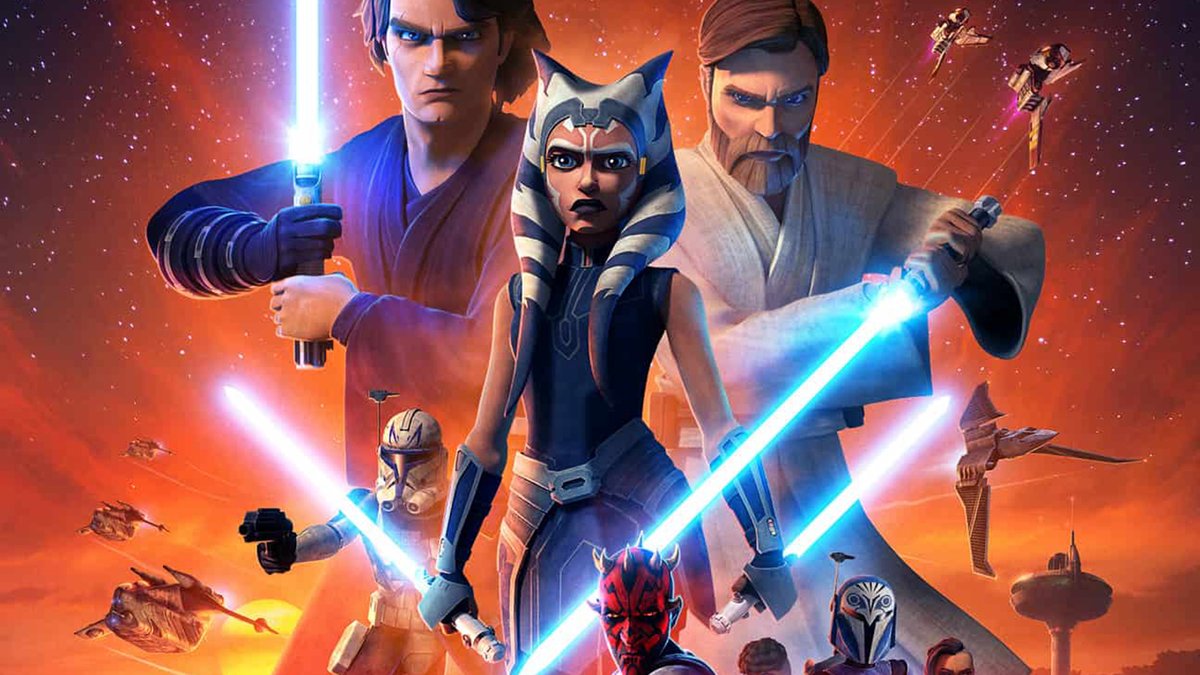
The rumble of Republic gunships, the crackle of blaster fire, and the mournful echo of Order 66 – few chapters in Star Wars history carry the emotional weight and narrative significance of The Clone Wars Season 7. Its long-awaited arrival not only offered a vital conclusion to an unfinished saga but fundamentally reshaped our understanding of the Star Wars universe, leaving an indelible legacy and impact of Clone Wars Season 7 on the Star Wars universe. It’s a story of sacrifice, betrayal, and the enduring spirit of hope, brilliantly tying together threads from across the Skywalker saga and beyond.
This final season wasn't just a bonus; it was a crucial piece of the puzzle, revealing untold stories that enhanced everything from Revenge of the Sith to The Mandalorian. It deepened characters we thought we knew and introduced new ones who quickly carved out their own place in the galaxy. For many, it completed the story arc of one of Star Wars’ most beloved characters, Ahsoka Tano, in a way that felt both inevitable and heartbreaking.
At a Glance: The Enduring Echoes of Season 7
- Ahsoka Tano's Definitive Arc: Witness her harrowing escape from Order 66, cementing her as a resilient survivor and a cornerstone of the Star Wars narrative.
- Deepened Galactic Lore: Explores the Siege of Mandalore, the origins of the Bad Batch, and the chilling effectiveness of Order 66 from the clones' perspective.
- Enhanced Canonical Connections: Seamlessly bridges The Clone Wars with Revenge of the Sith, Star Wars Rebels, and even The Mandalorian, creating a more cohesive timeline.
- Emotional Climax: Delivers some of the most powerful and tragic moments in Star Wars, underscoring the true cost of war and the Jedi's fall.
- Artistic Triumph: Showcases vastly improved animation, voice acting, and musical scoring, pushing the boundaries of animated storytelling.
- Foundation for Future Stories: Directly sets up the events and characters of Star Wars: The Bad Batch and influences live-action narratives.
A Story Decades in the Making: The Long Road to Closure
The journey of The Clone Wars to its seventh and final season is a saga in itself. After Disney acquired Lucasfilm in 2012, the show was cancelled, leaving several planned story arcs unfinished. Fans grieved the abrupt ending, but hope flickered years later when Lucasfilm announced its revival for Disney+. This wasn't just a gesture of goodwill; it was an acknowledgment that these stories weren't just "kids' cartoons" but integral parts of Star Wars canon that deserved their proper conclusion.
The return of Season 7 in 2020, dubbed "The Final Season," was met with immense anticipation. It arrived with the promise of resolving key storylines and providing a definitive capstone to the series. The season was split into three distinct story arcs: the "Bad Batch" arc, the "Ahsoka's Walkabout" arc (also known as the Martez sisters arc), and the "Siege of Mandalore" arc. Each played a crucial role in shaping the overarching legacy and impact of Clone Wars Season 7 on the Star Wars universe.
Forging Essential Canon: Narrative Revelations and Character Depths
Season 7 didn't just fill in gaps; it actively reshaped our understanding of crucial events and characters, adding layers of nuance and tragedy that resonated across the entire saga.
Ahsoka Tano's Defining Journey: From Jedi Padawan to Fugitive
Perhaps the most profound impact of Season 7 centers on Ahsoka Tano. Having left the Jedi Order at the end of Season 5, her return was eagerly awaited. Her "Walkabout" arc explored her life outside the Order, showcasing her independence and compassion. While some initially found the arc slow, it deliberately set up Ahsoka's moral compass and readiness to confront the darkness of the galaxy without the Jedi's rigid structure.
The true climax, however, was the "Siege of Mandalore." Here, we see Ahsoka leading Republic forces alongside Bo-Katan Kryze against Darth Maul. This arc isn't just an action spectacle; it's a deep dive into Ahsoka's capabilities as a leader and a warrior. Crucially, it positions her perfectly for the devastation that follows: Order 66. Her confrontation with Maul, where he warns her of Anakin's impending fall, is chillingly prophetic and adds another layer of tragedy to her former master's fate.
Her survival of Order 66, thanks to her bond with Captain Rex and her ingenuity, is one of the most vital canon additions. It explains how she vanished before Revenge of the Sith and lays the groundwork for her eventual re-emergence in Star Wars Rebels and The Mandalorian. Without Season 7, her journey feels incomplete; with it, she stands as a testament to defiance and hope in the face of overwhelming despair. Her final scene, leaving her lightsabers buried on a desolate moon, serves as a poignant monument to the fallen Jedi and her own tragic loss.
Anakin Skywalker's Tragic Descent: A Dark Mirror
While Anakin himself doesn't feature heavily in the final episodes of Season 7, his presence looms large. Maul's vision of Anakin's destiny, and his direct appeals to Ahsoka about saving him, underscore the inevitability of his fall. We see the Republic he serves twist into the Empire, and the clones he fights alongside become instruments of his former master's destruction.
The "Siege of Mandalore" runs concurrently with the events of Revenge of the Sith. This direct overlap allows viewers to experience the emotional fallout of Order 66 through Ahsoka and Rex’s eyes, while knowing what is simultaneously happening with Anakin. This juxtaposition makes Anakin's turn to Darth Vader even more gut-wrenching, as we witness the last vestiges of the good he once represented being systematically dismantled. The season subtly reinforces that Anakin's fall wasn't sudden but a culmination of years of manipulation, fear, and attachment, making his transformation into Vader all the more tragic.
The Clones' Humanity and Order 66's Devastation
Season 7 profoundly humanizes the clone troopers. The "Bad Batch" arc introduces us to unique, genetically modified clones, but it's the "Siege of Mandalore" that truly makes Order 66 horrifyingly personal. Captain Rex, one of the most beloved clones, grapples with the execution of his brothers and the betrayal of the Jedi. His struggle to remove his inhibitor chip and resist the command is a harrowing depiction of free will battling programmed obedience.
The clones' unwavering loyalty, twisted into a weapon against their allies, is a brutal revelation. We see them, moments after fighting alongside Ahsoka, turn on her without hesitation. The final scenes of the season, showing the mass graves of the clones and their crashed Star Destroyer, are a stark reminder of the countless lives lost and the utter devastation wrought by Palpatine's grand plan. It elevates Order 66 from a plot device to a deeply personal tragedy for both the Jedi and the clones themselves, cementing the clones not just as soldiers, but as individuals whose lives were stolen.
Maul's Chilling Foresight and Enduring Menace
Darth Maul's role in Season 7 solidifies his status as one of Star Wars' most compelling villains. His capture by Ahsoka and the Republic leads to an electrifying confrontation where he reveals his awareness of Palpatine's machinations. His desperate attempt to convince Ahsoka to join him against Sidious isn't just a power play; it's a terrifyingly accurate warning.
Maul's escape amidst Order 66, battling hordes of clones, showcases his raw power and cunning. His ultimate fate, fleeing Mandalore, leaves him perfectly positioned for his eventual return in Solo: A Star Wars Story and Star Wars Rebels. Season 7 ensures that Maul remains a perpetual threat, a survivor fueled by hatred and a tragic figure whose life was ruined by Sidious, yet who could not escape the dark influence.
The Rise of the Bad Batch: Foundational Lore
The opening arc of Season 7, featuring Clone Force 99, affectionately known as the Bad Batch, provides essential backstory for their own spin-off series. We learn about their unique skills and their distinct personalities. Their mission to Skako Minor, rescuing Echo and uncovering Separatist secrets, highlights their effectiveness and introduces them as a quirky, but highly capable, special ops unit.
This arc serves as a direct prequel to Star Wars: The Bad Batch, showing their origins and laying the groundwork for their defection from the newly formed Empire. It successfully introduces a new dynamic to clone storytelling, moving beyond the traditional "regs" and showcasing the diversity within the clone army.
Mandalore's Enduring Saga: A World Forged in Conflict
Season 7 delivers the long-anticipated "Siege of Mandalore," a conflict teased for years. This arc significantly expands Mandalore's complex history, particularly the struggle between its traditional warrior past and its pacifist present. Bo-Katan Kryze's efforts to reclaim her home, with Ahsoka's help, underscore the planet's enduring importance and its connection to the greater galactic conflict.
The fate of Mandalore in this season – captured by Maul, liberated by the Republic, and then plunged into chaos by Order 66 – paints a grim picture of a world constantly besieged. This deepens the lore of Mandalore, making its eventual fate under Imperial occupation and subsequent struggles for independence (as seen in Star Wars Rebels and The Mandalorian) far more impactful. The Darksaber, an iconic Mandalorian artifact, is also central to this arc, connecting directly to its later appearances. For those eager to Explore Star Wars Clone Wars Season 7 in detail, this storyline alone is worth the watch.
A Visual and Auditory Masterpiece: Elevating Animated Storytelling
Beyond its narrative contributions, Season 7 stands as a pinnacle of animated television. The years-long hiatus allowed for significant advancements in animation technology, and it shows. Character models are more detailed, environments are richer, and the action sequences are breathtaking.
The "Siege of Mandalore" in particular showcases this technical prowess. The lightsaber duels are fluid and impactful, especially Ahsoka's intense battle with Maul. The scale of the space battles and the destruction of the Star Destroyer during Order 66 are cinematic in scope, rivaling live-action productions. The visual storytelling, from the subtle nuances of character expressions to the sprawling cityscapes of Mandalore, immerses the viewer completely.
The sound design and musical score also reached new heights. Kevin Kiner's score for the "Siege of Mandalore" is particularly powerful, blending familiar Star Wars motifs with unique, emotional pieces that perfectly underscore the tragedy unfolding on screen. The final moments of the season, virtually dialogue-free, rely almost entirely on visual and auditory storytelling to convey the profound sense of loss and despair, a testament to the show's artistic maturity.
The Emotional Core: A Farewell to Arms and Ideals
Season 7 is, at its heart, a tragedy. It explores the themes of loss, betrayal, and the cost of war with a maturity rarely seen in animated television.
- The Weight of Betrayal: Ahsoka's deep personal connection to the clones she fought alongside makes their sudden turn against her incredibly painful. It's a betrayal not just of trust, but of shared experiences and camaraderie.
- The End of Innocence: For many characters, particularly Rex and Ahsoka, the end of the Clone Wars signifies the end of any remaining idealism. They witness the Republic, which they believed in and fought for, crumble into tyranny.
- Sacrifice and Survival: The season forces characters to make impossible choices. Rex's struggle for survival and Ahsoka's lone escape emphasize the harrowing reality of the galaxy post-Order 66.
- Echoes of the Past: The final shots of Vader discovering Ahsoka's buried lightsaber and the helmet of a fallen clone serve as a haunting reminder of the past and the galaxy's painful transition. It's a silent moment that speaks volumes about the lingering sorrow of a war that claimed countless lives and irrevocably altered destinies.
Shaping the Future: How Season 7 Echoes Across the Galaxy
The legacy and impact of Clone Wars Season 7 on the Star Wars universe extend far beyond its own runtime. It directly influences and enriches subsequent stories across different mediums.
- Star Wars Rebels: Ahsoka's arc in Season 7 provides crucial context for her mysterious return in Rebels and explains her deep-seated emotional scars. Her confrontation with Darth Vader in Rebels gains immense power knowing the full extent of their shared past and the tragedy of their separation. Rex's survival also directly leads to his eventual appearance as a rebel operative.
- The Mandalorian: The live-action series benefits significantly from Season 7's groundwork. Bo-Katan Kryze's appearance and her quest to reclaim the Darksaber (which Maul wields in S7) are directly linked. Ahsoka Tano's live-action debut, and her continued fight against the remnants of the Empire, are made richer by understanding her experiences during Order 66. The series relies heavily on the foundational lore established in The Clone Wars, demonstrating its indispensable nature.
- Obi-Wan Kenobi: The deep friendship and tragic separation between Obi-Wan and Anakin, as well as the clones' loyalty, are all amplified by Season 7's portrayal of the war's final days. The emotional weight of Obi-Wan's solitude and Vader's rage is intensified.
- Star Wars: The Bad Batch: As mentioned, Season 7's opening arc is a direct precursor, establishing the titular squad and setting the stage for their own adventures in a post-Republic galaxy. It makes their plight and their moral choices immediately understandable.
Beyond the Screen: Fan Engagement and Critical Acclaim
The reaction to The Clone Wars Season 7 was overwhelmingly positive. Fans celebrated its ability to deliver on years of anticipation, praising its narrative depth, emotional resonance, and stunning animation. It reaffirmed The Clone Wars not just as a significant part of Star Wars, but as a masterclass in serialized storytelling.
The season sparked countless discussions, theories, and analytical deep dives within the fandom. It cemented the belief that Dave Filoni, George Lucas's protégé, is a crucial voice in Star Wars storytelling, capable of weaving intricate narratives that honor the past while paving the way for the future. Its critical success underscored the value of animation as a serious storytelling medium and demonstrated the power of fan dedication in bringing beloved stories to completion.
Common Questions & Misconceptions About Season 7
Was Season 7 always planned to end The Clone Wars?
Yes, the stories told in Season 7 were part of creator George Lucas and showrunner Dave Filoni's original plans for the show's conclusion before its initial cancellation. The "Siege of Mandalore" was always intended as a major capstone arc.
Why didn't we see more of other characters like Obi-Wan or Yoda in Season 7?
Season 7 intentionally narrowed its focus to Ahsoka Tano and Captain Rex's perspective during the final days of the war, particularly during the "Siege of Mandalore." This decision allowed for a more intimate and personal exploration of Order 66, distinct from the Jedi perspective shown in Revenge of the Sith. Other characters like Obi-Wan and Yoda had their stories more fully explored in Episode III.
Was the "Bad Batch" arc originally planned for Season 7?
Yes, the "Bad Batch" arc was among the unfinished story reels released as part of "The Clone Wars Legacy" content after the show's initial cancellation. It was a planned arc that was finally completed and animated for Season 7.
Did Season 7 change anything established in Revenge of the Sith?
No, Season 7 meticulously respects the events of Revenge of the Sith. Instead of changing them, it expands upon them, showing what was happening concurrently in other parts of the galaxy. It adds emotional depth and context to the fall of the Jedi and the rise of the Empire without contradicting the film.
Is The Clone Wars essential viewing for The Mandalorian?
While not strictly required, Season 7 (and The Clone Wars in general) provides invaluable context for characters like Ahsoka Tano and Bo-Katan Kryze, as well as the lore surrounding Mandalore and the Darksaber in The Mandalorian. Watching it significantly enhances your understanding and appreciation of the live-action series.
Revisiting the Path: Why Season 7 Demands Your Attention
The legacy and impact of Clone Wars Season 7 on the Star Wars universe cannot be overstated. It's more than just a collection of animated episodes; it's a profound narrative achievement that enhances the entire Star Wars saga. It provides essential closure, deepens beloved characters, and bridges narratives across mediums in a way that feels both organic and breathtaking.
Whether you're a long-time fan who followed Ahsoka's journey from her first appearance, or a newcomer exploring the rich tapestry of galactic history, Season 7 is an indispensable viewing experience. It's a powerful reminder of the darkness that consumed the galaxy, the sacrifices made, and the embers of hope that survived against all odds. To truly grasp the scope and emotional weight of Star Wars, understanding the final chapters of The Clone Wars is not just recommended, it's essential. It offers a unique lens through which to view the end of an era and the birth of an Empire, enriching every subsequent journey through a galaxy far, far away.