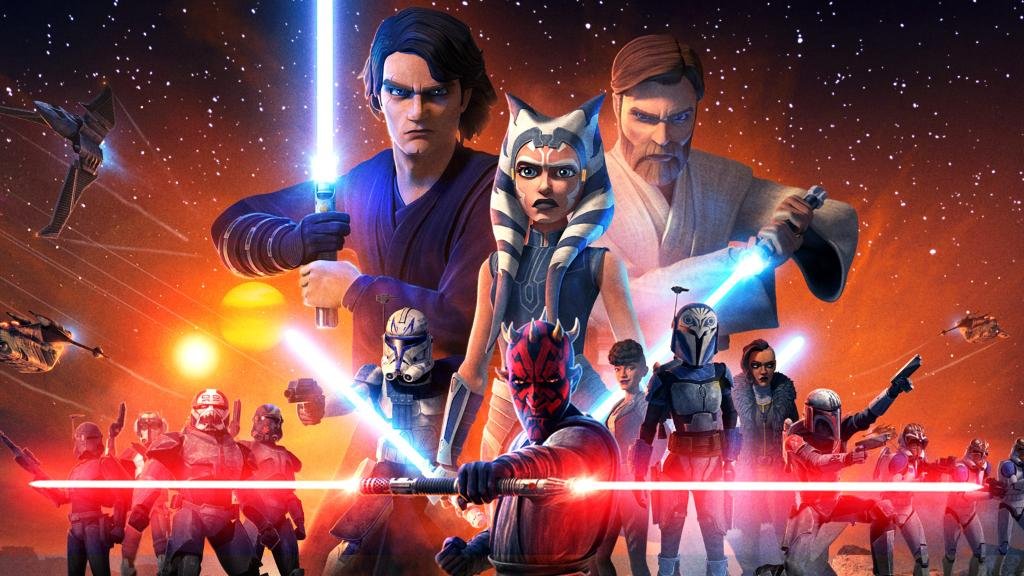
It was the return fans had yearned for, a saga left unfinished now brought to its spectacular, heartbreaking close. The journey to bring Star Wars: The Clone Wars Season 7 to our screens was as epic and complex as the war it depicted, a testament to relentless fan passion and the dedication of its creators. Delving into the Production & Behind-the-Scenes Insights of Clone Wars Season 7 reveals not just how this final chapter was made, but why it resonated so deeply, offering a masterclass in storytelling under unique constraints.
At a Glance: The Final Season's Comeback
- Fan-Fueled Revival: After a premature cancellation, an impassioned #SaveTheCloneWars movement brought the series back on Disney+.
- A "Lost" Season Found: Season 7 adapted previously unproduced story arcs, some dating back to George Lucas's original plans.
- Technological Leap: Significant advancements in animation and rendering technology allowed for visually stunning and emotionally potent sequences.
- Narrative Closure: The season focused on tying loose ends, particularly Ahsoka Tano's journey and the chilling lead-up to Order 66, seamlessly bridging to Revenge of the Sith.
- Voice Actor Dedication: The original cast returned, imbuing their characters with years of accumulated depth and emotion.
- Dave Filoni's Vision: Executive Producer Dave Filoni spearheaded the revival, ensuring the tone and thematic integrity remained true to the series' legacy.
The Long Hiatus: Why Season 7 Was a Miracle
For years, Star Wars: The Clone Wars was the backbone of galactic storytelling, expanding a single line from A New Hope into a vast narrative universe. George Lucas’s vision for the prequel era, birthed in Star Wars: Episode II - Attack of the Clones with the Grand Army of the Republic and the Battle of Geonosis, truly came alive through the animated series. We watched Jedi generals like Anakin Skywalker, Obi-Wan Kenobi, and even the initially commissioned Jedi Master Sifo-Dyas's army of Jango Fett clones grapple with a galactic conflict designed to reshape everything.
Yet, its journey wasn't smooth. Despite critical acclaim and a devoted fanbase, the series was unceremoniously canceled in 2013 after Disney acquired Lucasfilm, leaving several planned story arcs unfinished. Fans were left with a cliffhanger, Ahsoka Tano's heart-wrenching departure from the Jedi Order in season 5 after being framed for bombing the Jedi Temple—a plot uncovered to be Barriss Offee's doing, but too late to restore Ahsoka's faith. Then came the chilling reveal of the inhibitor chips in Season 6, exposed by ARC Trooper Fives before his tragic death, planting seeds of doubt about the clones' loyalty that Captain Rex diligently reported. These critical moments formed the emotional bedrock that the final season would eventually build upon.
The #SaveTheCloneWars campaign wasn't just a hashtag; it was a rallying cry from a generation of fans who had grown up with Anakin, Ahsoka, and Rex. Lucasfilm and Disney were listening. The announcement at San Diego Comic-Con in 2018 that The Clone Wars would return for a final season on Disney+ was met with euphoria, a testament to the power of a passionate community and the enduring appeal of Star Wars The Clone Wars Season 7.
The Unfinished Business: Crafting the Final Arcs
Bringing back a beloved, yet dormant, series posed unique production challenges. The creative team, led by Executive Producer Dave Filoni, had a treasure trove of unproduced episodes, animatics, and concepts that were part of George Lucas's original plan. The goal for Season 7 wasn't to invent new stories from scratch but to meticulously select, refine, and produce the most critical arcs that would provide thematic and emotional closure. This meant not just finishing storylines, but also seamlessly integrating them into the existing canon, especially leading directly into Star Wars: Episode III – Revenge of the Sith.
Prioritizing Narrative Impact
The decision was made to focus on three distinct, yet interconnected, story arcs for the 12-episode final season:
- "The Bad Batch" (Episodes 1-4): A thrilling, action-packed opening that felt like classic Clone Wars.
- "Ahsoka's Walkabout" / "The Martez Sisters" (Episodes 5-8): A character-driven arc exploring Ahsoka's life outside the Jedi Order.
- "Siege of Mandalore" (Episodes 9-12): The epic, tragic climax tying directly into the events of Revenge of the Sith.
This structure allowed the production to balance fan-favorite action with crucial character development, ensuring that the finale resonated on multiple levels.
Technical Evolution: Bridging Old and New
One of the most significant behind-the-scenes hurdles was the technological gap. The original series began production in the mid-2000s, utilizing animation techniques and rendering capabilities that had evolved dramatically by the late 2010s. For Season 7, the team leveraged advancements made on Star Wars Rebels and other Lucasfilm Animation projects. This meant:
- Updated Character Models: While maintaining the iconic Clone Wars aesthetic, character models received subtle upgrades in texture, lighting, and detail. Ahsoka Tano, in particular, looked more refined, reflecting her growth and maturity.
- Enhanced Environments: Backgrounds and planets were rendered with greater complexity and realism, from the grimy streets of the Coruscant underworld to the devastated landscapes of Mandalore.
- Sophisticated Lighting and Visual Effects: The use of modern rendering techniques allowed for more dynamic lighting, volumetric effects (smoke, fog), and complex particle systems (blaster fire, explosions). This was particularly evident during the chaotic battles of the Siege of Mandalore, where every laser bolt and explosion felt more impactful.
- Motion Capture for Action: While not extensively used, elements of motion capture were employed for critical action sequences, particularly for the lightsaber duels. This brought an unparalleled fluidity and realism to fight choreography, especially during Ahsoka's confrontation with Maul, making it one of the most visually stunning duels in Star Wars animation.
This technological refresh wasn't just about making the show look better; it was about allowing the animators to convey the heightened stakes and emotional weight of the final episodes with unprecedented fidelity.
The Voices Behind the Clones and Jedi
A major part of The Clone Wars's enduring appeal lies in its stellar voice cast. For Season 7, securing the return of the original actors was paramount. Dee Bradley Baker's ability to voice every single clone trooper, giving each individual clone a distinct personality, remained a cornerstone of the series. Matt Lanter (Anakin Skywalker), James Arnold Taylor (Obi-Wan Kenobi), and Ashley Eckstein (Ahsoka Tano) returned to their iconic roles, bringing a decade's worth of understanding and nuance to their characters.
Eckstein, in particular, faced the challenge of portraying Ahsoka after her transformative journey away from the Jedi. Her performance in "The Martez Sisters" arc and the "Siege of Mandalore" episodes conveyed a profound sense of world-weariness, newfound independence, and ultimately, tragic resolve. For the final arc, the production team made the powerful decision to keep Maul's dialogue largely intact from the original animatics, voiced by Sam Witwer, ensuring that his menacing gravitas remained undiluted. The emotional investment of the cast was palpable, transforming an animated series into a deeply felt drama.
Deconstructing the Arcs: Production Deep Dives
1. "The Bad Batch": A Backdoor Pilot's Genesis
The first arc of Season 7 served as a direct lead-in to the origins of The Bad Batch series. While technically a "backdoor pilot," its roots were deeply embedded in Clone Wars' original unproduced material. The arc introduced Clone Force 99 – Hunter, Wrecker, Tech, and Crosshair – a squad of genetically enhanced clone commandos. This arc was designed to showcase their unique skills and personalities while also addressing the fallout from the Season 6 inhibitor chip conspiracy.
- Production Goal: To establish new characters quickly and effectively, demonstrate their tactical prowess, and set up Echo's dramatic rescue.
- Animation Focus: Character design for the Bad Batch required distinct looks while still clearly being clones. Their varied equipment and combat styles also necessitated more complex animation rigging and choreography.
- Story Integration: Teaming them with Captain Rex and Anakin to investigate a Separatist algorithm led to the discovery of a cybernetically altered Echo in a stasis chamber within the Techno Union. This arc not only delivered exciting action but also pushed forward the narrative for fan-favorite characters like Rex and Echo.
2. "Ahsoka's Walkabout" / "The Martez Sisters": Exploring a New Path
This arc, focusing on Ahsoka's life after leaving the Jedi, was arguably the most controversial among fans. Its deliberate pacing and departure from Jedi-centric action were intended to serve a crucial narrative purpose: to show Ahsoka outside the familiar confines of the Jedi Order, forcing her to confront the realities of the galaxy as a civilian.
- Production Goal: Deepen Ahsoka Tano's character arc by presenting her with moral dilemmas and social issues that were distinct from typical wartime scenarios. This arc was essential for her growth from a Padawan to the wise figure seen in later Star Wars content.
- Creative Decision: Dave Filoni steadfastly defended this arc, explaining that it was necessary to ground Ahsoka and show her interacting with non-Jedi perspectives. The "Martez sisters" (Trace and Rafa) represented the average citizen's disillusionment with both the Republic and the Separatists.
- Animation Nuance: This arc focused more on character expression and dialogue-heavy scenes, requiring animators to convey subtle emotions and body language, differentiating it from the more action-oriented arcs.
3. "The Siege of Mandalore": The Grand Finale
The final four episodes were the culmination of years of storytelling and the true centerpiece of Season 7. Designed to run concurrently with Revenge of the Sith, the epic Siege of Mandalore brought Ahsoka back into the war, aligning with Bo-Katan Kryze to reclaim her homeworld and capture Darth Maul.
- Production Intensity: This arc was the most demanding, requiring cinematic-level animation, complex crowd scenes, and intricate lightsaber choreography. The team poured significant resources into making every frame count.
- Lightsaber Choreography: The Ahsoka vs. Maul duel is a standout. Original Star Wars stunt coordinator Ray Park, who played Maul in The Phantom Menace, performed the motion capture for Maul's fight sequences. This allowed for an unparalleled level of authenticity and ferocity in the animated duel, making it feel like a live-action performance translated to animation.
- Emotional Weight: The arc masterfully interweaves personal stakes with galactic tragedy. Ahsoka, leading the 332nd company, battles Maul while the galaxy plunges into darkness with the chilling implementation of Order 66. The production team deliberately chose visual cues and sound design that mirrored Revenge of the Sith, amplifying the sense of impending doom.
- Climax of Clone Loyalty: The activation of inhibitor chips, turning the 332nd company against Ahsoka, was depicted with brutal efficiency. The struggle of Captain Rex to fight his chip, his whispered mention of Fives, and Ahsoka's desperate reliance on Fives' old report from Season 6 provided a gut-wrenching payoff to a long-running plot thread.
The Unseen Hand: Dave Filoni's Guiding Vision
Throughout the entire revival process, Dave Filoni's role was indispensable. As an apprentice to George Lucas himself, Filoni understood Lucas's vision for the Clone Wars era better than anyone. His commitment to concluding the story honorably, while bridging it to the broader Star Wars saga, was the driving force.
- Preserving Lucas's Intent: Filoni acted as a curator of Lucas's unproduced ideas, ensuring that the final season remained true to the creator's philosophical and thematic underpinnings, particularly concerning the nature of the Force (revisited from the Mortis arc, where Anakin was confirmed the Chosen One) and the moral complexities of war.
- Balancing Fan Expectations with Narrative Needs: While some fans expressed impatience with the "Martez Sisters" arc, Filoni and his team stood firm on its necessity for Ahsoka's development, understanding that not every episode could be an action spectacle. This commitment to character over pure spectacle showcased Dave Filoni's overarching vision for the series.
- Looking to the Future: Filoni also subtly laid groundwork for future Star Wars stories, notably with the introduction of The Bad Batch and the continued development of Ahsoka Tano, who would go on to appear in Rebels and her own live-action series.
Enduring Legacy: Why Season 7 Matters
The Production & Behind-the-Scenes Insights of Clone Wars Season 7 reveal a project of immense passion and technical ambition. It wasn't just about finishing a show; it was about honoring a legacy and providing a deeply satisfying, albeit tragic, conclusion to one of the most beloved chapters in Star Wars history.
The series finale, depicting Ahsoka and Rex surveying the graves of their fallen clone brothers, perfectly encapsulates the somber ending of the Clone Wars. It showed the immediate aftermath and lasting impact of Order 66 on those who survived, a unique perspective often glossed over in other Star Wars media.
For creators and storytellers, the journey of Clone Wars Season 7 offers powerful lessons:
- Never Underestimate Fan Passion: The series' return proves the enduring power of a dedicated fanbase.
- Commitment to Vision: Staying true to the creative intent, even when faced with a gap of years, yields authentic results.
- Embrace Technological Advancement: Utilize new tools to elevate storytelling, not just for superficial gloss.
- Character is King: Invest in character development, even if it means taking detours from pure action, because it makes the high-stakes moments truly resonate.
The final season of The Clone Wars wasn't just an addition to the Star Wars saga; it was a defining moment, solidifying its place as essential viewing and a triumph of animated storytelling. It delivered closure, deepened beloved characters, and proved that even after a long wait, some stories are absolutely worth finishing.